How Mortal Shell II combat works: no stamina bar, posture breaks, sidearms
Mortal Shell II combat is unrestricted by stamina and built on shattering enemy posture for criticals. What Cold Symmetry confirmed, and what is unpublished.
Last verified
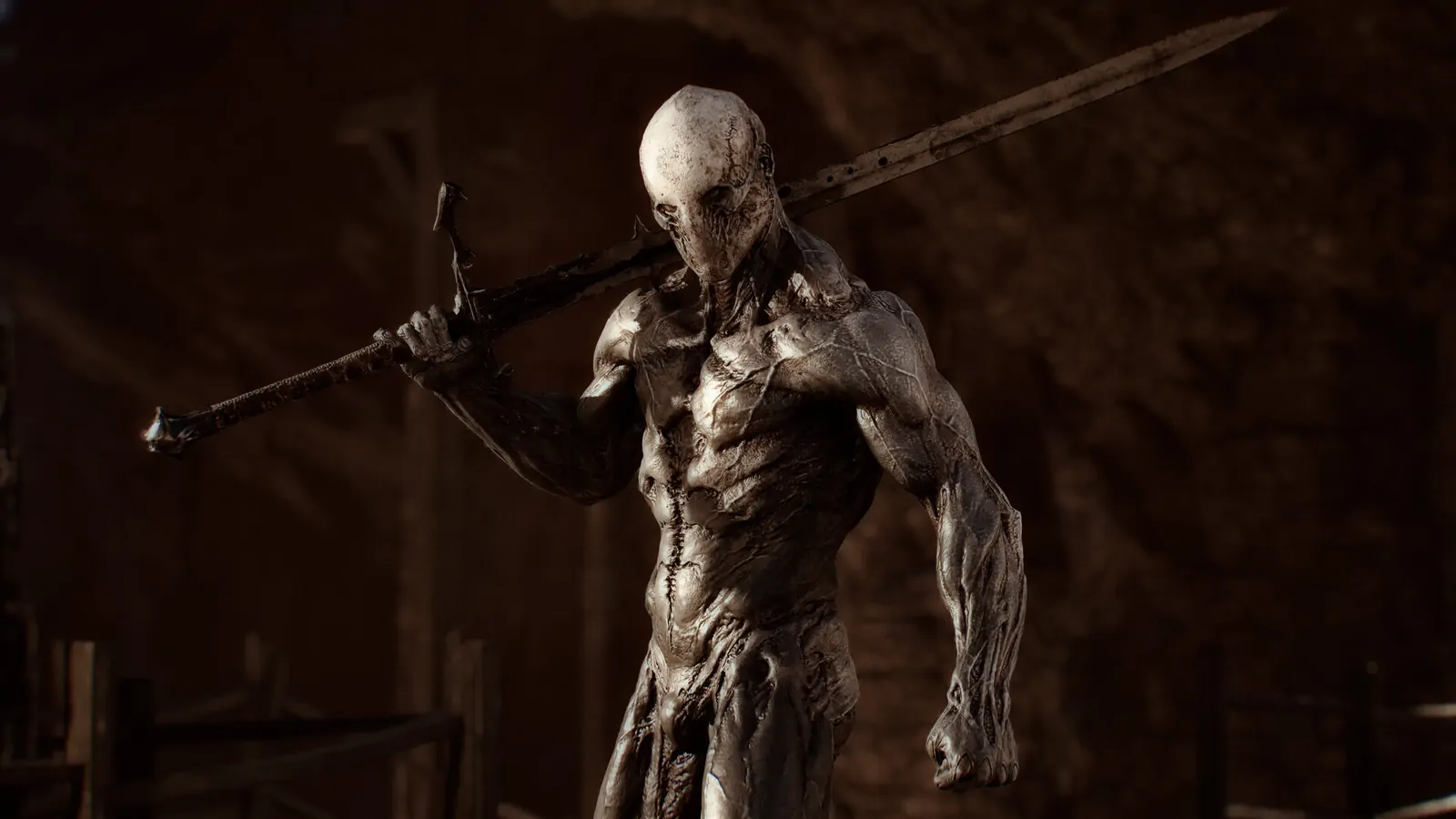
Cold Symmetry have published one precise sentence about how Mortal Shell II plays, and almost every combat claim circulating right now is a rewrite of it. Here is the sentence, from the official site:
“Mortal Shell II’s combat system is unrestricted by stamina, allowing players to exploit multiple tactics to shatter enemy posture and strike critically. Combat choices are bolstered by powerful sidearms and extensive upgrade options.”
The Steam store page adds one more framing word pair: the system is “agile yet grounded.” That is the whole of the first-party description. This page separates what those lines actually establish from what people are filling in around them.
1. No stamina bar — what that does and does not mean
Confirmed: combat is unrestricted by stamina. There is no stamina meter gating your attacks, dodges and sprints.
Not confirmed: what replaces it. This is the single most important gap on this page. Every soulslike needs some cost attached to swinging a heavy weapon, and Cold Symmetry have not said what theirs is. Three possibilities are consistent with the published wording, and none of them has been confirmed:
- Animation commitment only — the cost of an attack is its own recovery frames, so spacing and timing are the limiter rather than a bar.
- A different resource — a meter that powers abilities or criticals rather than basic actions.
- Per-Shell budgets — a cost carried by the Shell you are possessing rather than a universal bar.
If you see a page describing Mortal Shell II’s “stamina replacement system” in detail, ask which source it comes from. As of 3 August 2026 there is not one.
What the removal does reliably tell you: the classic stamina-duel rhythm from other soulslikes — poke, back off, wait for the bar — is not the intended rhythm here. “Agile” and “adrenaline-charged” are the studio’s own adjectives, and both point at fewer forced pauses.
2. Posture is the actual win condition
The offensive loop the studio describes is not “reduce health to zero.” It is:
- Apply multiple tactics to an enemy.
- Shatter their posture.
- Strike critically in the window that opens.
That is a poise-break economy: damage is the reward for winning a positional and timing exchange, not the thing you grind out with chip hits. It also explains the “multiple tactics” phrasing — posture systems in this genre usually respond to several different pressures (heavy hits, parries, ranged interrupts, ability procs) rather than one, which is what makes the sidearm mention below load-bearing rather than decorative.
Unpublished: whether posture is a visible meter, how fast it recovers, whether it differs by enemy class, and what a critical strike is actually called in-game. No frame data, no numbers.
3. Sidearms are a stated pillar, not a footnote
The official line says combat choices are “bolstered by powerful sidearms.” The word powerful is doing real work — sidearms are positioned as part of the tactical set that breaks posture, not as a chip-damage plink.
What has not been published: how many sidearms exist, whether ammunition is finite, whether they occupy a dedicated slot per Shell, or whether they upgrade along the same path as melee weapons. Treat any specific sidearm list you find as unverified.
4. Weapons and upgrades
Steam describes “deeper weapon design with extensive upgrade options” as one of the three ways the sequel expands on the original, and Cold Symmetry’s own site adds “more weapons, shells, and abilities to match any playstyle.”
So the intended shape is: pick a weapon, invest in it, and let that investment define your answer to posture problems. Our weapons page tracks every weapon named so far with its confirmation status attached — most are still trailer-level sightings rather than confirmed movesets.
5. Shells are the other half of the system
Combat is not just weapon plus sidearm. From the store page: dormant Shells are awakened and possessed, and each one unlocks innate strengths and unique abilities; you evolve your own style of combat by harnessing them, and unravel their secrets through lost memories. The official site confirms there are eight playable Shells.
The Gameplay Reveal on 1 April 2026 showed three of them — Tiel, the Acolyte, Eredrim, the Venerable, and Proxima, the Broodseeker — and framed each as carving a different trail through the world. That is the clearest official statement that Shell choice changes how you fight, not just how you look. Per-Shell detail lives on our Shells hub.
6. Where the combat happens
Two structural facts shape how often you will fight:
- The world is an interconnected open world, “expansive yet deliberately compact,” designed to respect the player’s time.
- Scattered through it are more than 80 dungeons, each pitched against “the talents and weaponry you have accrued on your way.”
Eighty-plus discrete challenge spaces is a lot of combat surface for a game that also advertises compactness — which is a reasonable read, but a read, so we will check the real distribution after launch.
7. What Mortal Shell (2020) did — as context, not as fact
The first game’s mechanics are the most common source of confident-sounding Mortal Shell II claims, so it is worth stating them separately and labelling them clearly. In Mortal Shell (2020):
- Harden turned you to stone on command, absorbing a hit and interrupting the attacker. It was the signature defensive tool.
- Resolve built up through combat and powered special attacks.
- Riposte returned health on a well-timed parry, gated by a consumable seal.
- Stamina did exist and did gate your actions.
That last point is the one that matters: the sequel has explicitly changed it. Nothing in Cold Symmetry’s Mortal Shell II material confirms that Harden, Resolve or Riposte return in any form. They may; treat every “Harden works like X in the sequel” claim as prequel-based inference until launch. If you are wondering whether you need the original first, we answer that separately in do you need to play Mortal Shell 1.
8. Practical notes you can actually rely on now
| Question | Status |
|---|---|
| Is there a stamina bar? | No — officially confirmed |
| Do you break posture for criticals? | Yes — officially confirmed |
| Are there ranged options? | Yes — “powerful sidearms,” officially confirmed |
| Are there difficulty settings? | Not stated. Steam’s feature list for App 2584270 does not include an “Adjustable Difficulty” tag. That is an absence of a tag, not a confirmed absence of the feature |
| Is any of it co-op? | No. Steam lists Single-player only |
| Controller support | Full controller support, with DualShock and DualSense support listed |
For the hands-on side of this — what the Open Beta build actually let players do — see the Open Beta page and the beginner guide. For the hardware you need to run it, see PC settings.
How this page gets updated
Mortal Shell II releases 20 August 2026, with Devout Edition pre-orders getting up to 72 hours of advanced access. Within the first days of playing the retail build, every “unpublished” item above gets replaced with tested behaviour and its own source row — and anything on this page that the final game contradicts gets rewritten, not quietly deleted.