Night Mode: choose the challenge without losing track of your route
Plan Mortal Shell II Night Mode around daytime-only beacons, adaptive difficulty limits, the Zmey grab warning and the game's updated lighting options.
By Mortal Shell 2 Wiki editorial team · Last updated
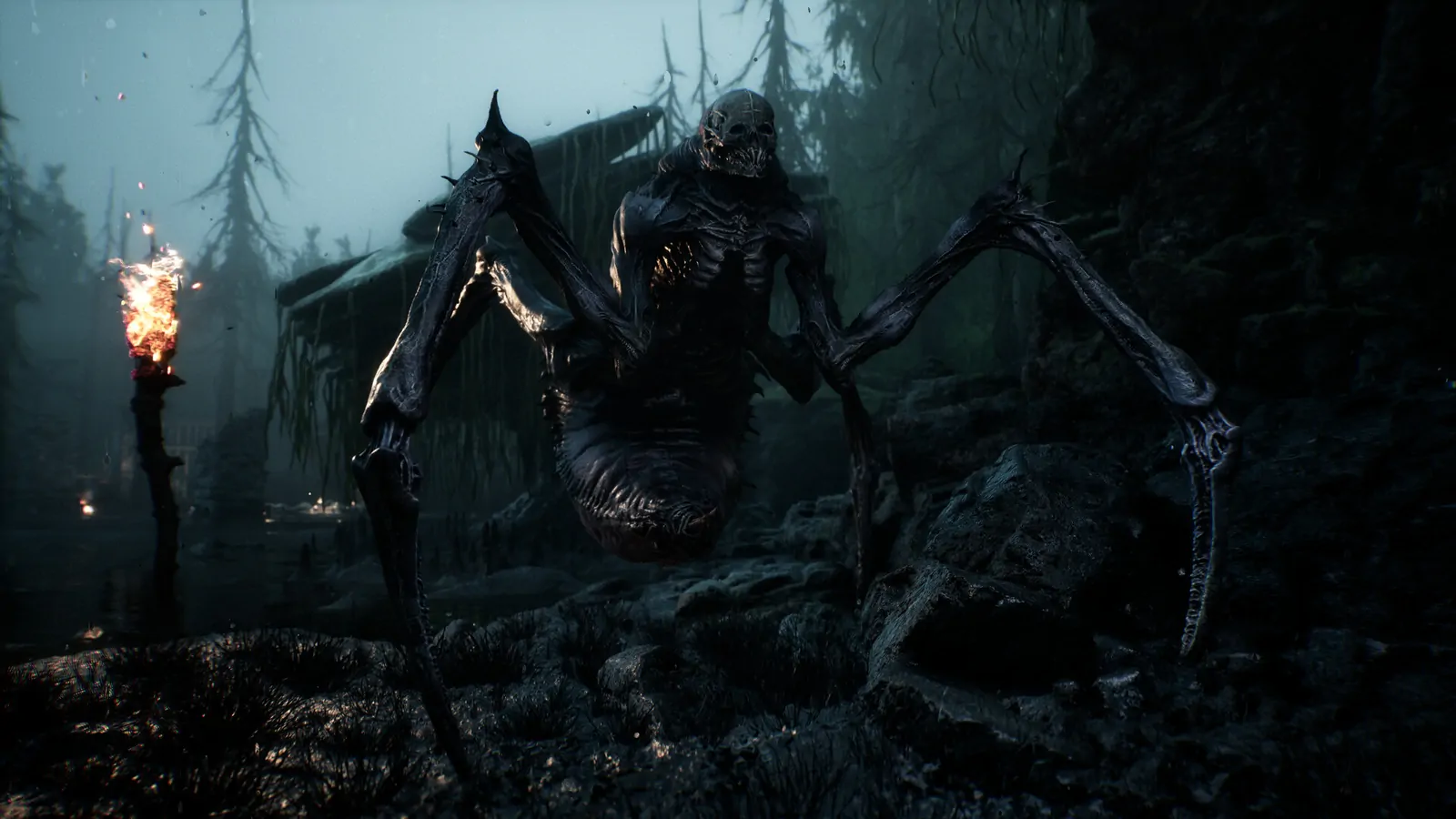
Use Night Mode when you want the added challenge; finish uncertain daytime exploration first. The official updates establish practical differences, including daytime-only added beacons in Fainweald and Mammon and an exception to adaptive difficulty reductions. Night Mode is therefore more than a darker screenshot filter. Plan the route, the fight and the visual setup as separate decisions.
This guide explains those tradeoffs. It does not prescribe an unverified activation item, dialogue sequence or New Game Plus requirement. Use the option and warnings actually available in your current save rather than resetting a campaign because an old launch discussion requested different rules.
Daytime-only beacons change the exploration decision
The Week 1 update added beacons across Fainweald and Mammon that are active only during the day. That statement concerns the added entries; it does not mean every beacon in the entire world switches off at night. Equally, a checkpoint you remember from a daytime route should not automatically be treated as a working stop during a night expedition.
Before setting out, decide which known checkpoint you intend to use and what you will do if it is inactive. Finish an uncertain daytime visit before relying on it as a recovery point. If your immediate goal is locating a missed interaction or completing a cleansing check, remove the lighting variable first. Darkness can make a familiar-looking approach less useful without proving that the game deleted your progress.
Keep travel access separate from finding a beacon. A visited location, a cleansed encounter and an available travel destination are not interchangeable observations. The beacon guide explains that distinction. If the route depends on a specific entry, inspect that entry rather than assuming a nearby label represents the same stop.
A sensible night outing begins from a route you already recognize. Use the known landmarks and exits to identify where you can disengage from an encounter. If you become unsure of the return path, shorten the expedition instead of pressing onward solely to justify having enabled a challenge modifier.
Adaptive difficulty does not offer the same safety net
The September 5 update describes adaptive reductions for ordinary play and explicitly excludes Night Mode from those reductions. It says Night Mode can be pushed harder but will not be made easier by that system. This is a published distinction, not a numerical enemy-scaling formula.
Do not assume repeated failures will produce the same reduction you expected outside Night Mode. If your aim is learning an unfamiliar enemy or recovering a disrupted route, ordinary conditions offer a clearer starting point. Return to the challenge when you understand what went wrong, rather than treating another death as a guaranteed adjustment toward an easier fight.
Keep the adaptive setting and Night Mode state separate when describing a problem. The later September hotfix improved the adaptive indicator and made the night icon easier to see. Check the displayed state in the installed build. An icon helps identify the active context; it does not tell you an undocumented multiplier or prove that every enemy changed by the same amount.
For the setting’s wider behavior, read the adaptive difficulty guide. This page concentrates on the decision to take a night route, not on duplicating the entire difficulty-setting procedure.
Zmey’s grab needs its own plan
The Week 1 notes distinguish Zmey’s tail grab between normal play and Night Mode. They fix the case that could take both the Shell and Harbinger from full health to zero together, while explicitly retaining the extreme outcome in Night Mode. Do not assume a full health bar is protection from that named threat.
That changes your priority when preparing for the encounter: recognize and avoid the grab rather than budgeting to absorb it. Preserve enough space to see the move and prioritize a defensive response over one extra attack. This is a planning recommendation tied to the documented attack, not a claim that every Zmey move kills instantly or that this page supplies a measured dodge window.
If a clip shows someone surviving an attack you did not, compare the mode, move and update before copying the response. A different grab, a normal-mode attempt or older behavior can produce a misleading comparison. Describe the actual attack when asking for help instead of reducing every loss to an assumed health-stat problem.
Ripostes remain useful, without becoming a guaranteed solution
Week 1 made player riposte damage scale with enemy health so it remains relevant in late-game play, New Game Plus and Night Mode. It also adjusted animation protection and recovery. This supports practicing a reliable punish; it does not establish that your weapon, enemy or defensive timing is irrelevant.
Choose an opponent and attack you already recognize before extending a night session. If the response works in ordinary conditions, compare what becomes harder to read at night: the approach, the warning animation or the end of recovery. Correct that specific problem before changing the whole build.
Do not apply a parry habit to an explicitly unparryable move. The combat guide uses named attack examples to separate those decisions. A harder mode does not turn a prohibited response into a valid one, and an invulnerability adjustment in a patch is not permission to ignore every follow-up attack.
Lighting options and hub behavior are separate checks
Rotten Autumn added Nightmode lighting presets. These are worth inspecting if the difficulty you are having is visual: identifying an exit, reading the edge of an arena or distinguishing a warning effect. Compare the available presets in your own build without treating a brighter-looking image as proof that enemy damage or challenge rules have changed.
The October 30 hotfix separately fixed Night Mode triggering inside the hub. If an older account describes unexpected darkness there, first confirm that your installation includes the fix. A repaired hub trigger does not define how the modifier normally activates everywhere else.
The November 16 update removed the Halloween set dressing. That statement alone does not say that the lighting presets or all Rotten Autumn gameplay additions were removed. Keep seasonal decoration, display options and combat rules as different categories; do not reset your progression to recover a cosmetic effect based on a guess.
Before committing to another night expedition
- Identify the immediate goal: optional challenge, a specific encounter or an exploration check.
- Confirm the current mode and adaptive indicator rather than relying on a previous session.
- Choose a known route whose recovery plan does not depend on an unverified daytime-only stop.
- Inspect the lighting options if visibility is the problem; change the build only for a named combat need.
- Account for the documented Zmey grab exception if that is your destination.
- Review the next-cycle checklist separately. Night Mode and starting another campaign cycle are different decisions.
If the session stops being useful practice, preserve the campaign and reconsider the goal. Another attempt is worthwhile when you know what you will change. It is not evidence that a hidden difficulty reduction, a new cycle or an unspecified unlock will automatically repair the route.