Dungeon Planning: Read the Compact Open World as a Network
How to plan exploration in Mortal Shell II's compact interconnected world and 80-plus dungeons without treating Open Beta map notes as a complete retail map.
Last verified
The official description of Mortal Shell II gives the exploration page a useful shape: a compact open world, an interconnected route structure, and more than 80 dungeons. It does not publish a complete retail map or the order in which every dungeon should be cleared, so this page combines the official world frame with a practical route-recording method.
The useful released-game method is to log the network as you play. A route notebook remains useful when a map, Shell lock, or upgrade gate needs to be checked again after a patch.
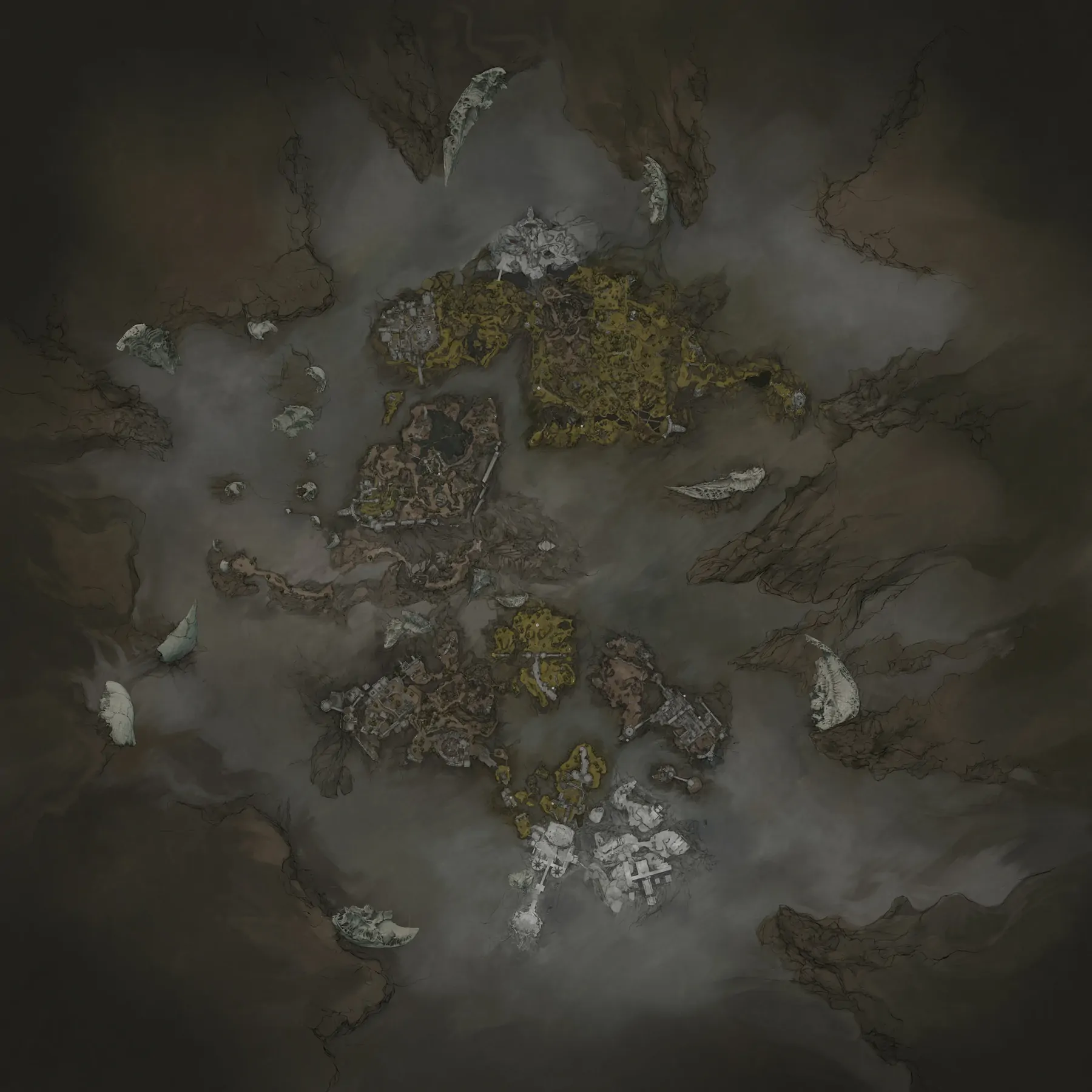
Build a route log, not a checklist of guesses
For every new area, record five things:
| Field | Why it matters |
|---|---|
| Entrance | Shows which hub or path can reach the area again. |
| Exit and shortcut | Prevents repeating a long route after a death. |
| Shell or weapon test | Notes which role feels comfortable in that space. |
| Locked interaction | Creates a return marker without pretending to know the key. |
| Upgrade or rest point | Defines when a detour is worth the risk. |
Use a simple status of open, tested, locked, or unknown. Do not write a guessed solution next to a locked door; write what is visible and return when a confirmed tool or Shell changes the situation.
Plan each dungeon in three passes
Pass one: find the exit safely
The first trip should establish the entrance, major branches, enemy pressure, and the safest retreat. Do not force a full clear if the dungeon is teaching a new posture or sidearm interaction. The official combat system is designed around shattering posture and striking critically, so learning the enemy’s pressure pattern is progress even when you leave early.
Pass two: test the Shell and sidearm
Return with a specific question: can this Shell pressure posture more reliably, or does another sidearm create a better critical window? The game is explicitly unrestricted by stamina and supports multiple tactics, so use a controlled comparison instead of repeating the same attack string.
Pass three: collect and connect
Once the route is understood, collect upgrade materials and test every visible shortcut. Mark connections to nearby regions rather than treating the dungeon as a one-way level. The phrase interconnected open world is an official design description; the exact shortcut locations still require a current-build route record.
Use the world size correctly
More than 80 dungeons does not mean every room should be cleared immediately. A compact world can make backtracking valuable because one new Shell, weapon upgrade, or memory may open a previously skipped branch. Leave a clear note for why you left:
- cannot beat the posture loop yet;
- missing a confirmed interaction;
- route is too expensive in healing or time;
- returning later for a Shell-specific test;
- fully cleared but not yet connected to the map.
That note is more useful than a vague “come back later” marker.
Storage planning is part of the route
Steam lists 70 GB of available storage for the PC version. That is a hardware requirement, not an exploration mechanic, but it is worth checking before a new install because a large download or patch can interrupt a planned session. The same store page lists the game as single-player, so route notes and saves should be treated as local progression until a cloud or backup policy is confirmed.
What is not public yet
The following details are deliberately not presented as facts:
- the final map image and region names;
- the required Shell, weapon, or item for each locked route;
- dungeon order, boss placement, and reward tables;
- fast travel rules and respec locations;
- whether all 80-plus dungeons are mandatory or optional.
For what Cold Symmetry has actually confirmed about combat, see combat system. For the named Shell roles, see Shell selection. Both pages keep official facts separate from build-specific observations.